01
Charge while you gather
Explore convenient charging during worship, meetings, volunteer activities, and staff hours. Level 2 charging adds energy over a visit; it is not a promise of a full charge during Mass.
SMART LEVEL 2 CHARGINGA FIRST CONVERSATION · TORRANCE, CA
A thoughtful clean-energy pilot proposed for The 103 Saints Korean Catholic Center.
Smart EV charging today. Room for solar tomorrow. Guided by the needs of the church, every step of the way.
Discover the pilotPreliminary feasibility concept
A place to gather.
A place to recharge.
One campus.
A considered first step.
Perimeter Level 2 study concept
Shared electrical capacity
Plan space for a future canopy
01 / THE PROPOSED PILOT
Begin by studying 20 perimeter parking spaces for Level 2 charging, with the final number shaped by parish needs, electrical capacity, parking access, and cost. No equipment or construction is approved at this stage.
Explore convenient charging during worship, meetings, volunteer activities, and staff hours. Level 2 charging adds energy over a visit; it is not a promise of a full charge during Mass.
SMART LEVEL 2 CHARGINGStudy canopy locations, shade, conduit routes, and future electrical connections early. A solar parking canopy would be a separate phase, subject to design, permits, and its own economics.
SOLAR CANOPY READINESSEvaluate controls that adjust charging across connected cars within a designed power limit. This may help manage peak demand, but available capacity and any upgrades require engineering review.
MANAGED ELECTRICAL LOADThe first assessment would also review accessible spaces and routes, charger compatibility, lighting, safety, network connectivity, and maintenance responsibilities.
PERIMETER CHARGING / DISCUSSION SCHEMATIC
Study existing parking spaces that face the outer property fence or wall, with chargers at the perimeter. The church-building walls are not proposed charging locations. A continuous row is preferred if it fits; the 12 + 8 grouping below is only one possible split.
Illustrative only — not a verified survey, aerial overlay, or construction drawing. Not to scale. Actual parking spaces, boundaries, dimensions, accessibility, and electrical capacity have not been verified.
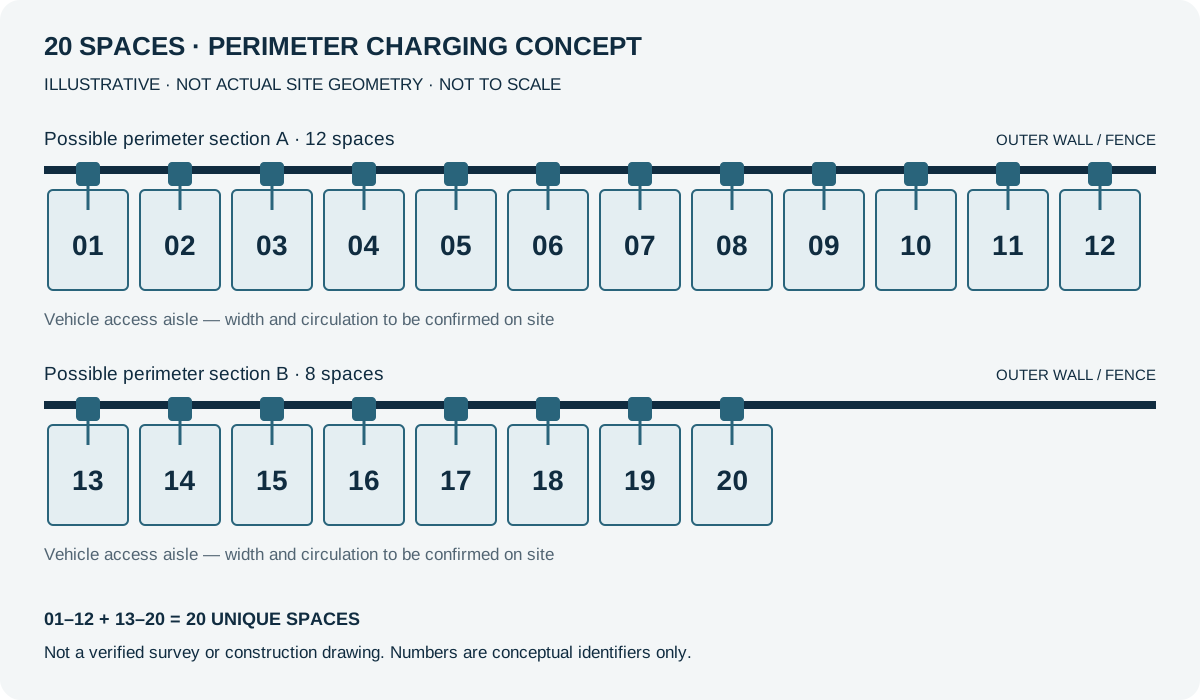
Confirm the actual stall count and locations on a site visit. Equipment mounting, vehicle protection, access routes, conduit routing, and distribution/load-management equipment require qualified design. Twenty spaces does not imply twenty electrical panels.
02 / PEOPLE FIRST
The opportunity begins with service: caring for shared resources while making everyday life a little easier for the parish and its neighbors.
Faith. Fellowship.
A shared future.
Give parishioners, staff, and volunteers a chance to charge where they already spend time, especially those with limited access to home charging.
Explore future shade and a comfortable parking environment while protecting access for worship, gatherings, and parish activities.
Consider neighborhood charging during church-approved hours. Leadership would shape access, pricing, security, and parking priorities, subject to any funding requirements.
Measure usage, operating costs, reliability, and parish feedback before considering more chargers or a solar canopy.
03 / A RESPONSIBLE FINANCIAL PATH
Low-upfront-cost arrangements may be possible. The next step is to compare complete costs, responsibilities, and contract terms—before asking the church to make a decision.
An outside owner or operator could fund some or all installation costs in exchange for agreed site rights and charging revenue. Availability depends on site economics and a partner’s offer.
Potentially reduce the church’s initial capital requirement and assign day-to-day operations to a specialist.
Contract length, electricity costs, pricing control, insurance, maintenance, revenue terms, and equipment removal or ownership at the end.
Screen utility programs, California charging incentives, local grants, and potential community support. Confirm current application windows, site eligibility, approved equipment, access rules, and whether different funding sources can be combined.
No funding or financial outcome is guaranteed. These are research resources, not confirmed offers or evidence of church eligibility. No incentive award, zero-cost installation, energy savings, or charging revenue is assumed. A proposal would include electricity, demand charges where applicable, network fees, maintenance, insurance, and replacement costs.
A FEW IMPORTANT QUESTIONS
No. This is an independent preliminary concept prepared for discussion with The 103 Saints Korean Catholic Center. It does not represent church endorsement, a partnership, an engineering plan, or a construction offer.
The concept focuses on charging during longer visits to the campus. A feasibility review would compare actual parking durations, demand, cost, and electrical requirements. DC fast charging is not part of this initial concept.
Any layout would need to preserve accessible routes, emergency access, and the church’s operational priorities. Parking impacts, construction timing, and any public access would be discussed before a final design or commitment.
No. It means considering future canopy space and infrastructure while studying the initial chargers. Solar installation would need separate structural and electrical design, utility review, permits, funding, and church approval. Solar panels alone do not provide outage backup.
A useful, reliable service that fits parish life and has costs and responsibilities the church understands and accepts. We would propose reviewing charger use, uptime, electricity and maintenance costs, parking impacts, and community feedback before expansion.
04 / A SIMPLE PATH FORWARD
The initial request is a short conversation with church leadership and a facilities representative to understand priorities and decide whether a site assessment is worthwhile.
Discuss parish needs, parking patterns, leadership priorities, and who should be involved.
With permission, review possible locations, electrical access, and utility usage provided by the church.
Obtain qualified site input, cost estimates, funding checks, and ownership comparisons.
Present a clear proposal. Proceed only after church leadership and any required property or diocesan approvals.
LET’S EXPLORE WHAT FITS
Interested in a conversation? Reply to the person who shared this proposal, or use the meeting request below.
Project contact details to be confirmed.